Personal · simulator
A32X
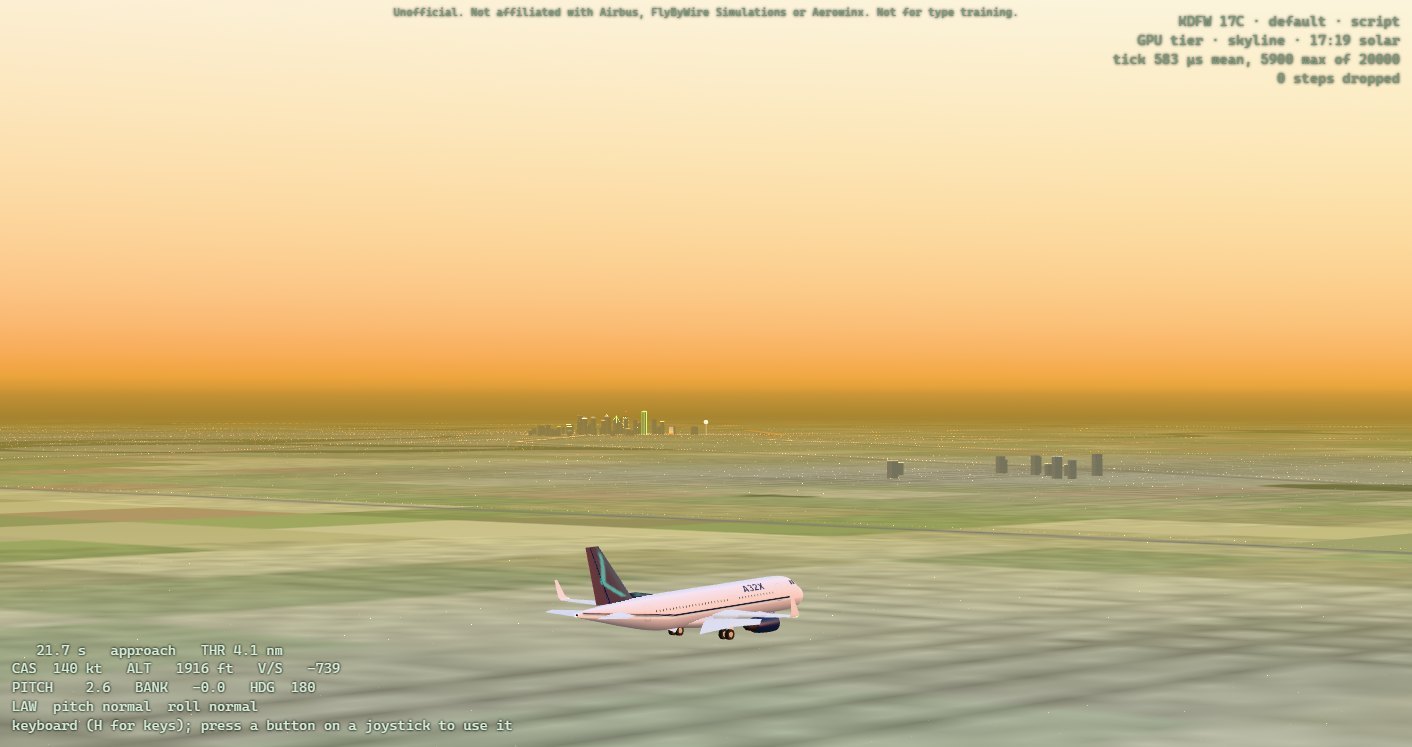
An Airbus A320 you fly in the browser. The A320's own flight laws, from FlyByWire's A32NX flight-control computers, fly an airframe fitted to the A320's published performance, on an ILS into Dallas/Fort Worth, drawn the way a 1980s full-flight simulator drew it.
What it is
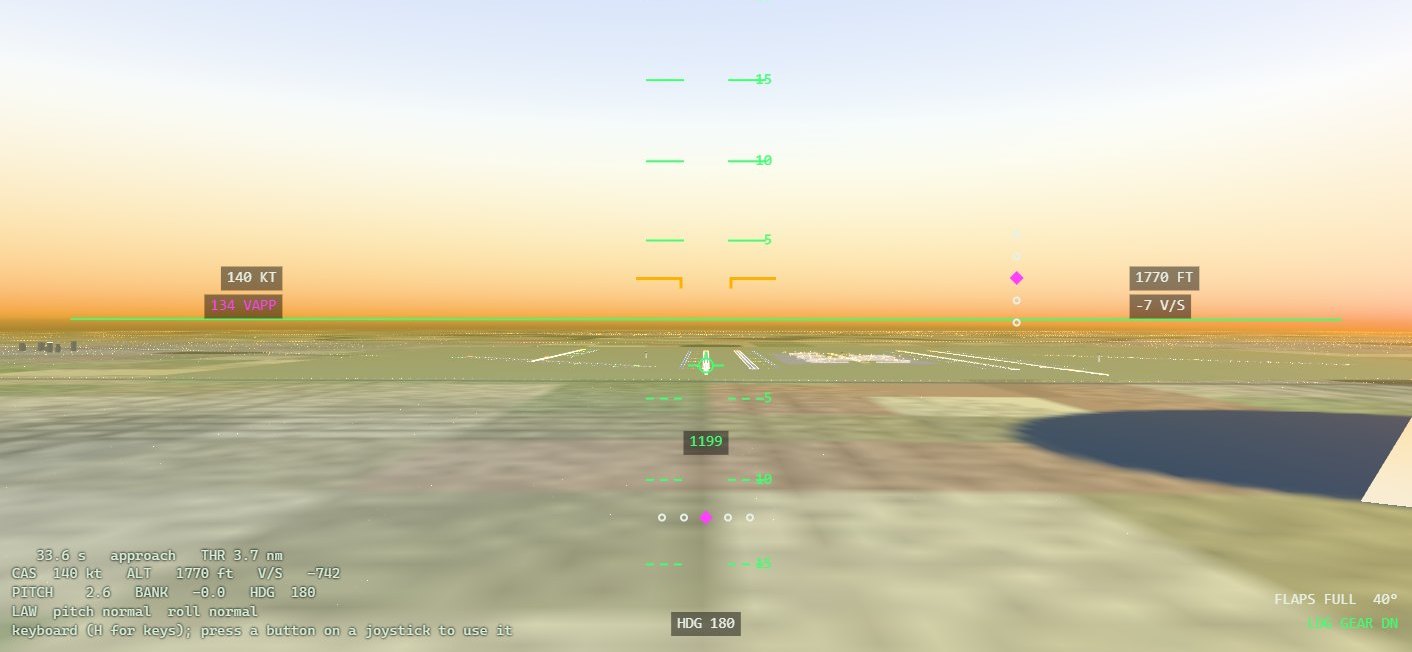
The flight runs at fifty steps a second, compiled to WebAssembly, in a worker of the page. Its flight-control computers are the A320's own design, built unmodified from FlyByWire's open-source A32NX: two ELACs, three SECs, two FACs and two FCDCs, with their normal, alternate and direct laws and their protections. They fly a JSBSim airframe fitted to fifty-seven cited A320 numbers. Nothing is installed and nothing is sent anywhere.
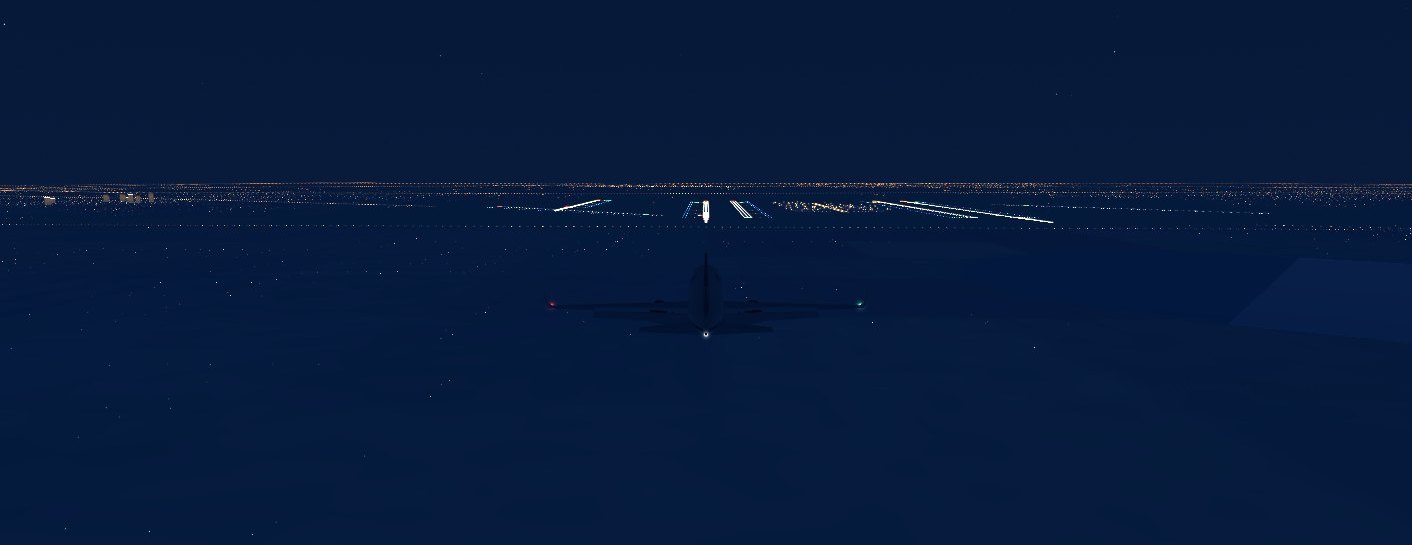
The view is a full-flight simulator's of the 1980s: light points, flat-shaded polygons, a horizon in haze. DFW is drawn whole, its seven runways with the FAA's markings and approach lights, then the country round it and the Dallas skyline. Without a graphics card the page draws a plainer world, so the flight keeps its fifty steps.
Flown by hand, and judged
- From 1,000 ft to the stopEvery ILS approach is judged: localizer and glideslope within a dot, sink under 1,000 fpm, speed within Vapp −5/+10 kt, bank under 7°, gear down and flaps full.
- Then the touchdownUnder 360 fpm and 2.6 g, the nose 0 to 10° up, 300 to 900 m past the threshold, within 5 m of the centreline, and no bounce.
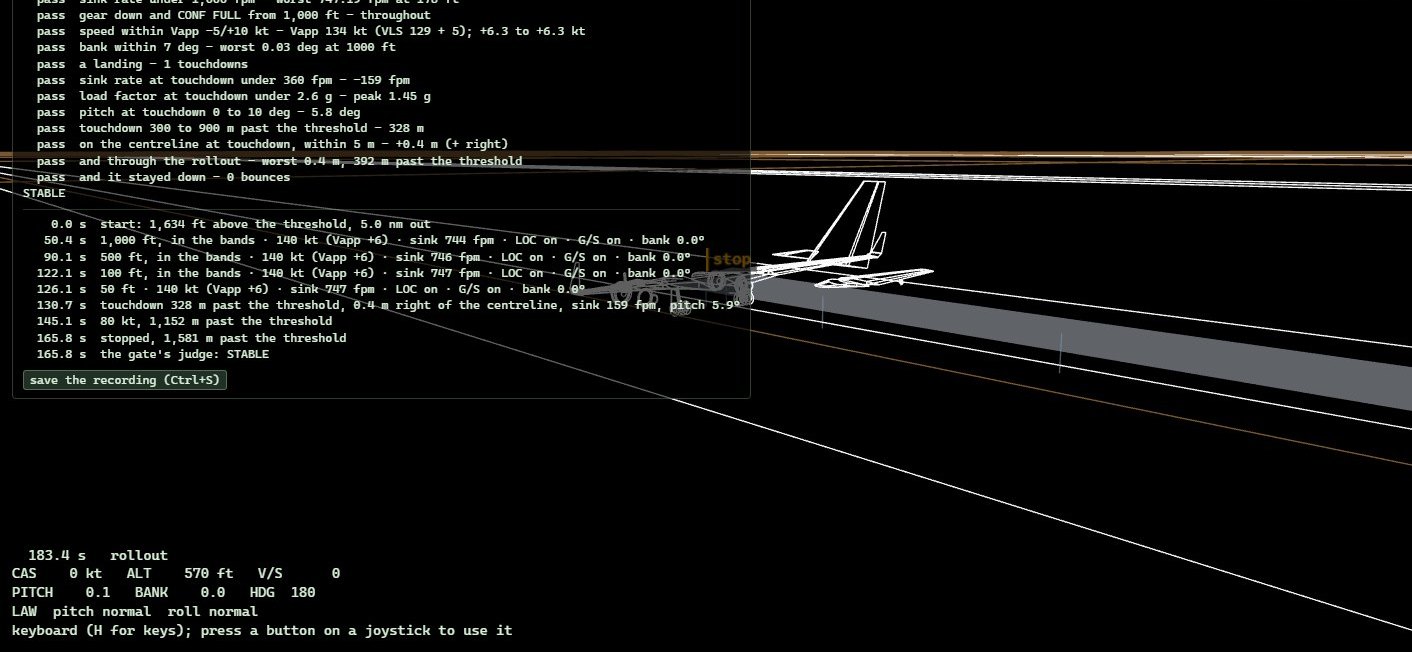
- A verdict and a recordingAt the stop the page prints the judge's verdict band by band, and the flight's moments. Ctrl+S saves the recording, and the native build replays it to the same verdict.
- Five in a rowThe project's gate: five approaches flown by hand with a joystick, each one stable, their touchdowns within 150 m of their mean.
In the browser
Plug in a joystick and press one of its buttons, or fly with the keyboard: H lists the keys. The address chooses the start, from the runway or on the approach, by day, at dusk or at night; a scripted crew can fly it while you watch.
- JOYSTICK OR KEYBOARD
- TEN CAMERAS
- K · DEBRIEF
- CTRL+S · RECORDING
K turns the world to vectors on black, as an air-combat debrief does: the flown path coloured by the gate's bands, the ILS as a tunnel, every runway's outline, and the moments tagged where they happened.
Unofficial: not affiliated with Airbus, FlyByWire Simulations or Aerowinx, and not for type training. A32X is free software under the GNU GPL, version 3. The simulator at flightsim.bochen.xyz is the 0.1.6 release, byte for byte, and its about page says where its source is.